

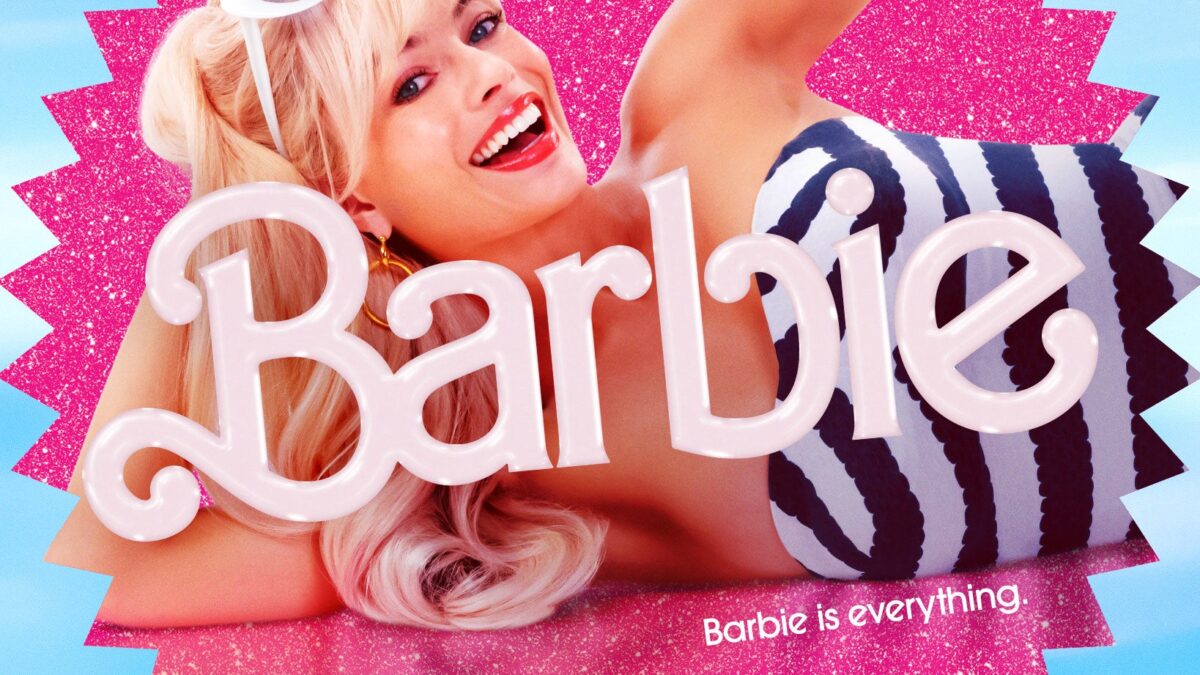
Let Toys Be Toys campaigner Megan Perryman goes to see the box-office smash and finds much to enjoy – and plenty to talk about
I was surprised when my 15-year-old daughter went to see Barbie with her friends on the last day of summer term. I was even more surprised when she enjoyed it so much that she asked me to take her again a week later.
I had mixed feelings about going to see the film, much as I have mixed feelings about the doll itself. As a child growing up in the 1980s with feminist parents, Barbie was banned from our house. When a friend brought a Barbie over to my house to play, I hid her in my bookshelf hoping to conceal her long enough that she would belong to me.
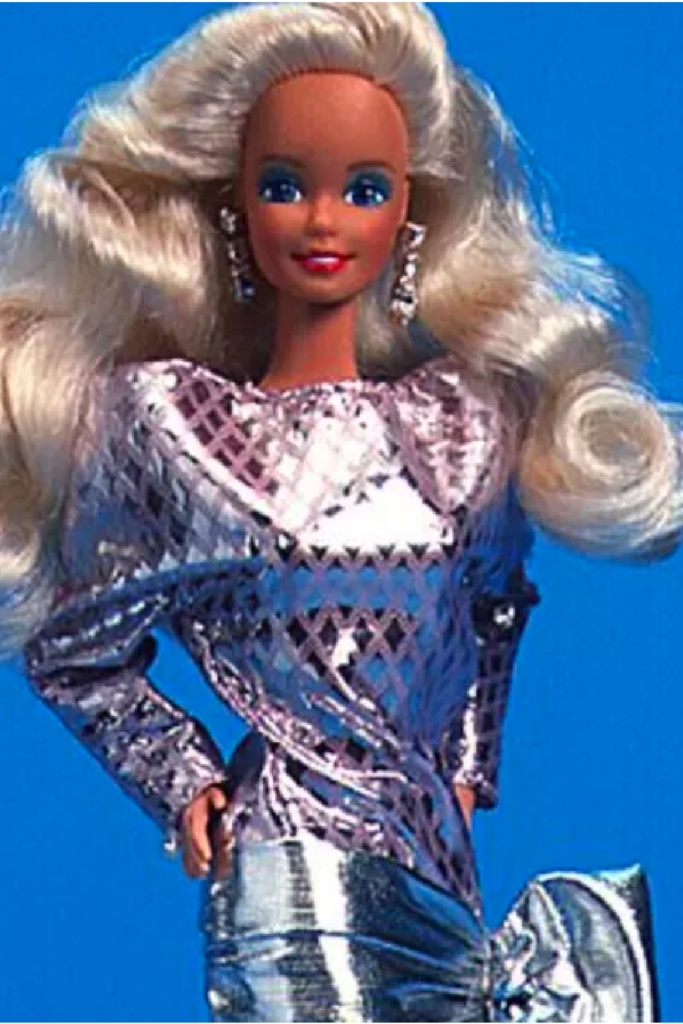
Years later as a parent, I wanted to give my daughter the best of both worlds, access to dolls and cars equally. Despite the intention, I was slightly horrified when four of her friends brought Barbie dolls as gifts to her fourth birthday party. The strange plastic monoliths with painted smiles and scanty clothes were so far from anything my daughter had experienced before.
Both homage and pastiche
To my delight, Director Greta Gerwig’s interpretation of the brand leans into our culture’s mixed feelings about it. Both homage and pastiche, it walks the fine line between promoting the brand (and there’s no doubt this will have a phenomenal impact on sales of Barbie for Mattel) and poking fun at the nonsensical world of a child’s toy.

Barbie’s world is indeed ridiculous. She is unable to eat or drink, she is genital-free and she can magically dress herself in the blink of an eye. Added to that is the fact that all the Barbies are Barbie despite having different jobs and interests. We see President Barbie, physicist Barbie and Judge Barbie. There is a clear nod to diversity – in terms of ethnicity and body shape (as there is with the dolls themselves) but arguably not enough (as there is with the dolls themselves).
With a lovely sense of irony, Helen Mirren’s excellent narration tells us that by providing these positive role models, Barbie has come to understand that she has solved all issues of gender inequality in the real world.
Ken as accessory
Ken is an addition to Barbie. He’s an accessory who doesn’t own a house, a phone or a car. In a reversal of the “male gaze” phenomenon, Ken only has a good day when Barbie notices him. The film addresses his relationship with masculinity alongside Barbie’s increasing understanding of what it means to be female in the real world.

The dissection of our real-world patriarchal society is more nuanced than some have given it credit for. Being a man certainly conveys privilege in the real world but the film is honest with showing it’s more complex than that; Ken is shocked and disappointed to discover that being male is not enough of a credential to walk into a career without doing the same training as everyone else. By the end of the film, Ken is tasked with finding out who he really is and what he wants. He is neither a dominant nor submissive force, simply an individual trying to make his way in life.
The film doesn’t shy away from the fact that President Barbie, physicist Barbie and Judge Barbie would be anomalies in the real world.
But Ken is not the star of the show and his development is ultimately a sub-plot. This film is firmly about Barbie’s exploration of femaleness and her role within that. In one scene, a group of teenage girls skilfully list everything problematic about the Barbie brand.
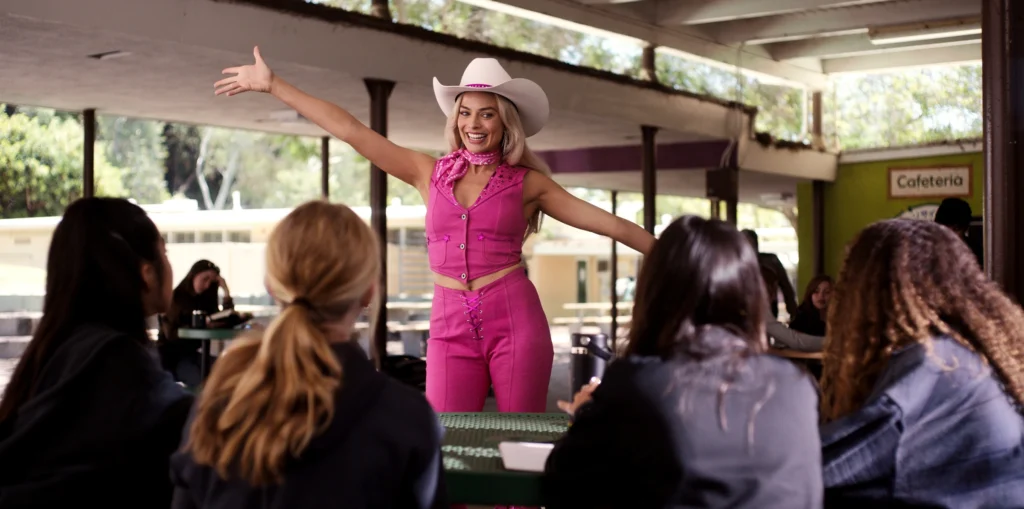
The film doesn’t shy away from the fact that President Barbie, physicist Barbie and Judge Barbie would be anomalies in the real world. And it addresses the idea that beauty is only skin deep (here Helen Mirren’s narrator mourns the fact that this discussion has to take place with Margot Robbie as the star of the film and accepts this undermines the message somewhat!).
Even in Barbie world, boys don’t like dolls
The speech by America Ferrera’s character about the weight of expectation on women and the contradictions within the stereotype deserves the praise it’s been given. It is nothing new, but by god it’s satisfying to hear it said out loud on the big screen.
The focus on femaleness is important and Barbie’s final scene (which I won’t give away now!) highlights that this is what the film is really about. I do however feel it missed a trick by not at least mentioning the many boys who enjoy playing with dolls. Indeed, the film opens with the line: “Since the beginning of time, since the first little girl ever existed, there have been dolls.”
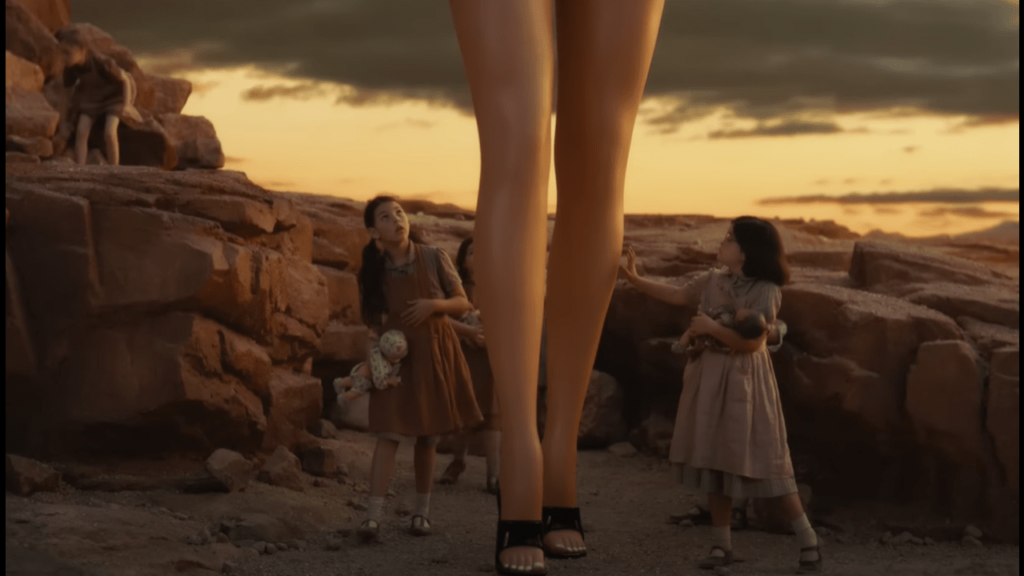
My son who joined us for the film claimed not to enjoy it as he “doesn’t like Barbies”, which prompted me to remind him just how much he loved them when he was younger! For a film promoting gender equality, this felt like a fairly fundamental error. There were multiple male ‘real life’ characters and it would have been easy for one of them to speak about how much they loved the doll as a child.
More than just brand promotion
There is so much more I could say about this film. I haven’t touched on Michael Cera’s excellent ally Alan or Kate McKinnon’s incarnation of Barbie whose damage only serves to make her more powerful. I haven’t mentioned the respectful references to Barbie’s origins or the beautiful moment at the bus stop. There are many great jokes, musical numbers and an incredible set. It is very easy to be seduced by the pink shininess of it all, much as I was seduced by the doll herself as a child. The film is ultimately a promotion of a brand and we need to be mindful of that, but Greta Gerwig offers a thoughtful interpretation that makes the film more than just that.