


The Let Books Be Books campaign has attracted much media coverage and high profile support, but labelling books ‘for boys’ is sometimes defended as a useful tool for getting boys to read. Tricia Lowther argues that gendering reading doesn’t help literacy, and may even be harming boys’ chances.
The Let Books Be Books campaign asks children’s publishers to take the ‘Boys’ and ‘Girls’ labels off books and allow children real free choice in the kinds of stories and activity books that interest them. The campaign has had success with publishers and retailers like Usborne , Parragon, and Paperchase, and seen support from prominent authors, but of course there have been people who disagree with us, and one argument in particular keeps cropping up; gendered books are acceptable because we need to encourage boys to read more.
There are three assumptions here: there is a gender gap in reading, boys need special treatment because of this and separate books could be a solution.
But is it true that we need to encourage boys especially to read? And if so, why would separate books necessarily be a positive approach? Mightn’t they exacerbate the problem?
I asked teachers, educators and parents for their thoughts and experiences, and took a look at the idea that boys lag far behind girls when it comes to reading.
Mind the gap
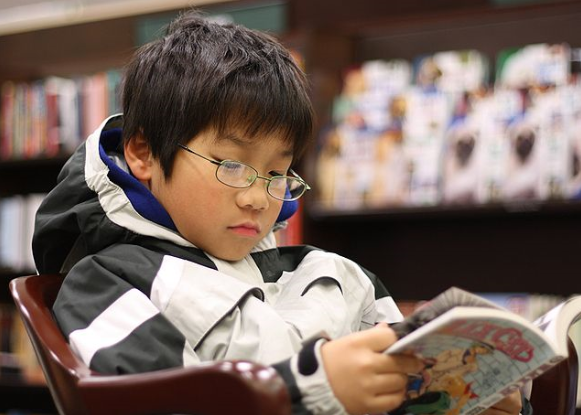
© Ragesoss/Wikimedia Commons/CC BY-SA 3.0
The 2012 report by the Boys Reading Commission, (BRC), compiled by the National Literacy Trust, reports that at age seven, there’s a gender gap of 7 percentage points in the proportion of pupils reaching the expected level in reading, and the numbers rise slightly with age. Media reporting and widespread concern means that parents often are led to think it normal for boys to struggle, or be uninterested in reading.
When I talked to teachers and educators about the gender literacy gap, several interesting points arose.
Firstly, the reading gap, while real, is is often perceived as much bigger than it really is. That’s partly because there is a difference between reading and literacy, the latter is defined as reading, writing and spelling, and of these it’s writing where the biggest gender gap is found, (of course the two are linked, and it’s easy to see how expectations of feminine and masculine – sitting down versus running around could have an effect here.)
Secondly, the focus on gender as an issue means that other factors, such as race and class, are ignored. Research has repeatedly shown that social class is the biggest indicator of how well a child does in school.
Jennifer Dyer, Diversity Programme Leader at the Institute of Physics, pointed out that the National Literacy Trust research didn’t control for class and that the gap between social classes in reading is far wider than that between genders; “There clearly is a myth about boys and reading as so many people seem to think that the gender gap in reading is bigger than it is, but research shows that the number one factor that determines your reading ability is how often your parents read out loud to you and the number of books in your house, which is connected with social class”.
There’s also research to suggest that reluctant boy readers have a higher profile than reluctant girl readers.
According to award-winning publisher Barrington Stoke, many girls do little or no reading and just as many girls as boys are dyslexic, but girls often present for assessment later. They suggest this could be because girls learn to be adept at hiding issues from school and family and are less likely than boys to ‘act up’ when they have trouble with schoolwork.
On a positive note, the latest National Literacy Trust research suggests that children’s reading enjoyment has reached its highest level for several years and that the gap between boys and girls has recently decreased.
It’s clearly nonsense to suggest that males are somehow inevitably destined to struggle with reading and writing; a quick glance at any English literature syllabus, or literary prize shortlist makes this clear. And some schools don’t report a gap in literacy between boys and girls. So why do some boys struggle?
The boy stereotype
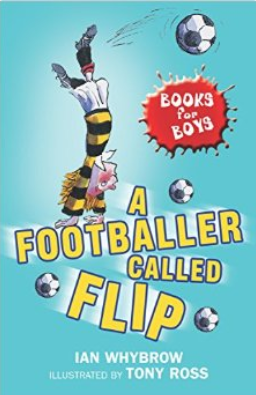
Football: for boys
Does the expectation that boys are active, sporty, dirty and tough mean some boys see reading as something for girls or ‘nerds’? Do commonplace assumptions about ‘boys will be boys’ drive a culture of low expectations, where parents are less likely to encourage them to read, or spend time doing reading and writing activities with them?
The BRC report found that one of the things boys’ underachievement in reading is associated with is: “Male gender identities which do not value learning and reading as a mark of success”.
Research showed that 18% of boys and 12% of girls think that reading is more for girls than boys, while 19% of boys said they would be embarrassed if their friends saw them reading.
From the report: “Peer pressure continues to influence the way boys define their identity – geeky/ nerdy/ boffin are all terms that are used to ridicule boys that read or are known to read. Films, TV and advertising have been somewhat responsible for peddling this attitude”, and, “Peer pressure from boys means they do not want to be seen as good or interested readers.”
Corinne Finnan, a secondary school teacher for 33 years told me; “A lot of the boys I taught did actually read a fair bit, Harry Potter helped enormously. That said, there were an equal number who thought it geeky or girly to read, and took the mickey out of boys who helped out in the school library.”
Research has shown that from a very young age, children think boys are academically inferior to girls, that they believe adults think so too, and that those beliefs hinder boys’ school achievement.
The BRC said that although there was no evidence for a biological basis for differences in academic skills between boys and girls, there was a perception that this might be the case, and that this expectation, expressed through ideas such as boys can’t sit still, girls are more mature etc, could affect how children behave in the classroom.
The report also said that parents are more likely to read to girls and take them to the library. So it seems that if we believe boys are less likely to enjoy reading, to read and write well, we are quite possibly helping to make it true.
What’s wrong with ‘boy friendly’ books?
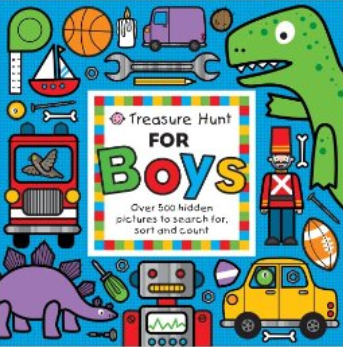
The suggestion is that all boys have the same restricted interests
When books are promoted by gender, they usually reflect stereotypical ideas of what it means to be a boy or a girl. Katy Guest in the Independent on Sunday may not have been entirely serious when she referred to the, “pink, frilly Girls’ Books of Shutting Up and Baking Cupcakes or butch, blue Boys’ Books of Fighting and Eating Your Snot”, but she wasn’t far off the mark.
The idea that boys need gender specific books accepts and reinforces all the same old assumptions about boys and girls – that gender dictates personality and interests. How many examples of girls who love football or boys who love fashion do we need before people stop telling children that these are boys or girls things?
Would adding the words ‘For Boys’ to the front of a book really make a boy who’s interested in, say, robots, be any more likely to pick it up than if it said ‘for Roboteers’? Targeting by interest is surely a more logical approach that excludes no-one and also encourages children of different genders to appreciate shared interests, (so please spare us a separate ‘Pink Sparkly Robots for Girls’).
Laura Davies, Development Coordinator with women’s education charity, Chwarae Teg, agrees that it is much better to try and break down the stereotypes than to further embed them through suggestions that boys like certain material and girls like other; “Part of the problem seems to be that children are receiving so many stereotypes so early on, (gender identity being formed from 3 – 5 years), that they restrict themselves to what they perceive as ‘suitable interests’ for them. It would be much better to encourage as much of a breadth and diversity of material as possible and reading for pleasure in all its guises, for all children, rather than try to make it about gender.”
Consider the parallel with toys – if we were having problems getting boys to play, would the best approach be to offer a limited choice under a ‘Boys’ sign in the hopes that they’d play with the kind of toys we assume they’d like? Or would it be to offer them a wide and varied choice and let them pick out whatever appealed to them the most?

Children don’t fit neatly into stereotypes
Educational consultant Mark Jennett, who worked on the NUT’s Breaking the Mould project, says there is little evidence that so called ‘boy friendly’ books have any impact on the number of boys reading, and there is nothing to suggest books that don’t endorse gender stereotypes would be discouraging to boys, in fact they may have the opposite effect.
“While boys may be put off by material presented as explicitly ‘for girls’, they are easily engaged by stories with female or non-traditional male protagonists, as long as they are well told.” says Jennett. In other words good books do not need to be gendered.
Says Jennett, “If we could get rid of the labelling that suggests some books (and the subjects they address) are only suitable for one sex, then not only could we help to break down stereotypes – and make children whose tastes and interests don’t conform to them feel less excluded – but also help to challenge the idea that boys are not meant to like certain things – like reading.”
If, as the BRC says, we need to “encourage positive gender identities that value reading” for boys, then it looks like the ‘butch, blue Boys’ Books of Fighting and Eating Your Snot’ is out.
Shutting out readers
Labelling a book ‘for boys’ doesn’t only exclude girls. There are many ways to be a boy. What about the reluctant boy reader who likes ballet? Where might he find a book that isn’t pink and sparkly and screams ‘for girls’? And as Mark Jennett asks, “Why don’t people worry more about the reluctant girl reader who is more interested in dinosaurs than princesses but is constantly informed by books in the library that dinosaurs are not for her?”
Teacher Corinne Finnan remembers author Tanya Landman “having the boys mesmerised” when she came into school and talked about her novel ‘The Goldsmith’s Daughter’. “The main protagonist was a strong female character who wanted to follow in her father’s craft even though it was ‘not a job for a girl’. The lads all queued to buy the book first”, says Finnan, whose anecdote clearly illustrates another of the problems with segregating books by gender: the assumption that boys will only read books about boys written by men, means they could miss out on books they would love.
Good teaching, not ‘boy books’
There is nothing to suggest that slapping the words ‘for boys’ on a book will have a positive effect on boys reading habits. On the contrary, books with ‘boys’ or ‘girls’ on the front encourage stereotypes that contribute to acceptance of the idea that reading isn’t a boy activity.
Reminder: when we say “Books for boys,” we set a default as books and reading are girl activities. We reinforce social expectations.
— skully jensen (@catagator) October 6, 2014
When we focus on gender and on how boys need special treatment, it simply reinforces to boys the idea that they are not as good as girls at reading. It also clouds the issue, many children are disadvantaged when it comes to reading, and gender is not the biggest indicator of reading ability.
Of course we should encourage reluctant readers; reluctant readers of every gender, race, ability and class. What we don’t need to do is tell children which books they are ‘supposed’ to read. We certainly don’t need to feed boys stereotypes that may discourage them from reading. Let them make their own choice. The only people who profit from gendered books are irresponsible publishers and retailers.
Despite the overall focus on gender, the recommendations that came out of the Boys Reading Commission suggested that the best approaches for boys were the same as for girls, as for all children, “They are perhaps better thought of as quality teaching.”
Children are little individuals, not profit units. Instead of making lazy gender based assumptions let’s allow them the space to learn, free from limitations. As journalist and children’s author Bel Mooney said in a radio discussion on marketing books as ‘boys’ or ‘girls’; “The imagination does not have a gender.”
~~~
Sign the Let Books Be Books petition here to tell publishers you don’t want to see books categorized by gender.
[zilla_button url=”http://www.change.org/en-GB/petitions/usborne-buster-igloo-other-children-s-publishers-stop-labelling-children-s-activity-sticker-and-story-books-as-for-girls-or-for-boys” class=”petition” style=”purple” size=”medium” type=”square” target=”_blank”] Sign books petition[/zilla_button]
Ten ways to challenge gender stereotypes in the classroom
~~~
Further Reading:
Boys’ Reading Commission – The report of the All-Party Parliamentary Literacy Group Commission. Report compiled by the National Literacy Trust
Write4Children, Winchester University Press Journal June 2013
NUT: Breaking the Mould – Gender Stereotypes
This article by Children’s Laureate Michael Morpurgo has some great suggestions of how to support children’s reading – not one of them is specific to boys.